When Tests Are Normal, But The Pain Is Real
Dr. Lee Warren discusses the concept of central sensitization in the above video. He explains how an over-sensitized nervous system can behave like a smoke alarm that keeps ringing after the fire is out.
Central Sensitization Syndrome (CSS) is a condition in which the central nervous system—the brain and spinal cord—becomes overly sensitive and remains in a heightened state of alert. As a result, it can amplify pain and other sensory signals, even when there’s no current tissue damage. Simply put, Central Sensitization Syndrome (CSS) is when the nervous system becomes extra sensitive and makes pain feel stronger, even when there’s no new injury.
Sensitization and Pain
When CSS occurs, its like the volume control on a radio becoming stuck on high. It amplifies sensory messages, making them stronger and, at times, distorted. People with a sensitized nervous system may experience pain in response to things that should not be painful. They may also experience heightened levels of pain in response to things that previously only caused mild to moderate pain. In some cases, the pain spreads to other areas of the body for no reason and symptoms such as fatigue, headaches, poor sleep and mood changes can occur.
Hypervigilance is a state of heightened, constant environmental awareness where the nervous system remains stuck in a perpetual “fight-or-flight” mode to scan for real or perceived threats.
Dan Buglio explains how when you have central sensitization, your brain over reacts to sensory signals, treating them as danger signals and sounding the alarm with subsequent physical reactions. Hyperexcitability of the central nervous system can then occur even in the absence of any incoming sensory information. This means that the brain and spinal cord can create symptoms on their own.
Central Sensitivity Syndromes
Examples of Central Sensitization Syndromes
- Fibromyalgia: The prototypical condition marked by widespread musculoskeletal pain, unrefreshing sleep, fatigue, and heightened pressure sensitivity.
- Irritable Bowel Syndrome (IBS): A functional gastrointestinal disorder involving visceral hypersensitivity and altered bowel habits.
- Chronic Fatigue Syndrome (Myalgic Encephalomyelitis/CFS): Characterized by profound, debilitating exhaustion that does not improve with rest, alongside cognitive and physical symptoms.
- Temporomandibular Joint Disorder (TMJ / TMD): Pain and dysfunction in the jaw joint and surrounding muscles that control jaw movement.
- Interstitial Cystitis (Painful Bladder Syndrome): Chronic inflammation or signaling dysfunction causing bladder pressure, urgency, and pelvic pain.
- Chronic Pelvic Pain & Vulvodynia: Persistent, unexplained pain in the pelvic or vulvar region.
- Migraines and Chronic Tension Headaches: Recurrent, severe head pain driven by central nervous system pathway sensitization.
- Myofascial Pain Syndrome: Chronic pain involving localized muscle trigger points and tight bands of muscle tissue.
- Multiple Chemical Sensitivity (MCS): Extreme hyperresponsiveness and adverse reactions to low-level chemical, environmental, or odor exposures.
- Restless Legs Syndrome (RLS): An uncontrollable urge to move the legs, typically caused by nervous system signaling discomfort.
- Primary Dysmenorrhea: Severe, disproportionate menstrual cramping pain not caused by a distinct pelvic pathology.
Reference: Ccjm.org Cleveland Journal of Medicine
Brain Activity and CSS
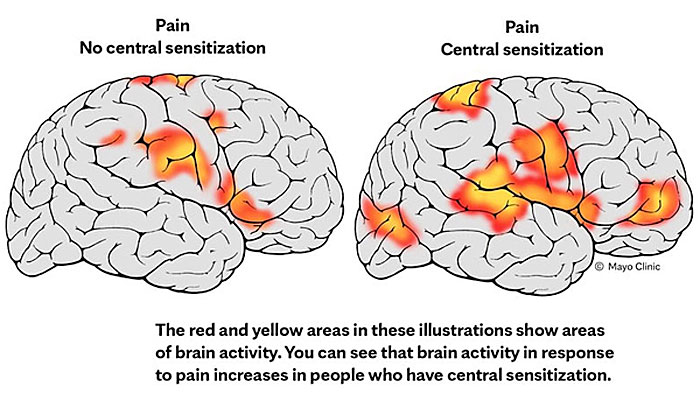
As the brain becomes faster at processing certain sensory signals, it becomes so sensitive that it can no longer accurately determine which sensory inputs indicate danger. So it makes more and more intense signals of pain and other uncomfortable sensations. You can see this in the brain image that shows the person with CSS, or a hypervigilant nervous system.